By the Staci Zampa Team | Stamford’s Top Real Estate Team
Thanksgiving has a way of revealing how well a home truly works. A kitchen that feels spacious on an ordinary Tuesday may become crowded when several people are cooking, while a beautiful dining room may prove less practical if it is disconnected from the rest of the gathering. Even details such as coat storage, guest parking and the path from the front door to the kitchen can shape the experience.
That is why buyers searching for Stamford homes for entertaining should think beyond square footage and listing photos. The best home is not necessarily the one with the largest kitchen or longest dining table. It is the one whose layout supports the way you welcome people, whether that means a formal holiday dinner, a relaxed buffet or an afternoon that moves between the kitchen, family room and backyard.
Start With the Way You Actually Entertain
Before evaluating floor plans, think about what hosting looks like in your household. Some hosts want guests gathered around the kitchen island, while others prefer to keep food preparation separate from the dining and living spaces. A household that regularly welcomes overnight visitors will have different priorities from one that hosts large dinners but rarely needs a guest room.
Thanksgiving offers a useful test because it combines nearly every entertaining need at once. There is food preparation, seating, serving, coat storage, conversation, cleanup and often a mix of ages and mobility needs. When touring a Stamford home, mentally follow the day from the moment guests arrive until the last dishes are put away. That exercise often reveals more than simply counting bedrooms and measuring the kitchen island.
Look for Kitchen Flow, Not Just Kitchen Size
A large kitchen can still be difficult for entertaining if its main pathways cross the primary work area. For example, guests may need to pass directly behind the cook to reach the refrigerator, powder room or family room. A smaller kitchen with a well-placed island, multiple access points and a nearby serving surface may function much better.
Pay attention to where people are likely to stand and how easily food can move from preparation to serving. Islands and peninsulas can create useful separation between cooks and guests, but only when there is enough clearance around them. Counter space near the oven, refrigerator and dining area also matters because holiday meals generate hot dishes, serving platters and appliances that all need temporary landing places.
Storage deserves the same practical scrutiny. Deep pantry cabinets, a walk-in pantry or even a nearby hall closet can keep serving pieces and occasional appliances from crowding everyday cabinets. In older Stamford houses, a kitchen may have considerable character but less built-in storage, so buyers should consider whether a pantry could be added without compromising circulation or architectural details.
Ventilation and lighting are easy to overlook during a daytime showing. Effective task lighting helps with food preparation, while layered ambient lighting makes the room more comfortable once cooking is finished. Buyers planning a renovation should also investigate electrical capacity, appliance placement and whether walls are structural before assuming that a kitchen can easily be opened to adjoining rooms.
Decide Between Open-Concept and Formal Spaces
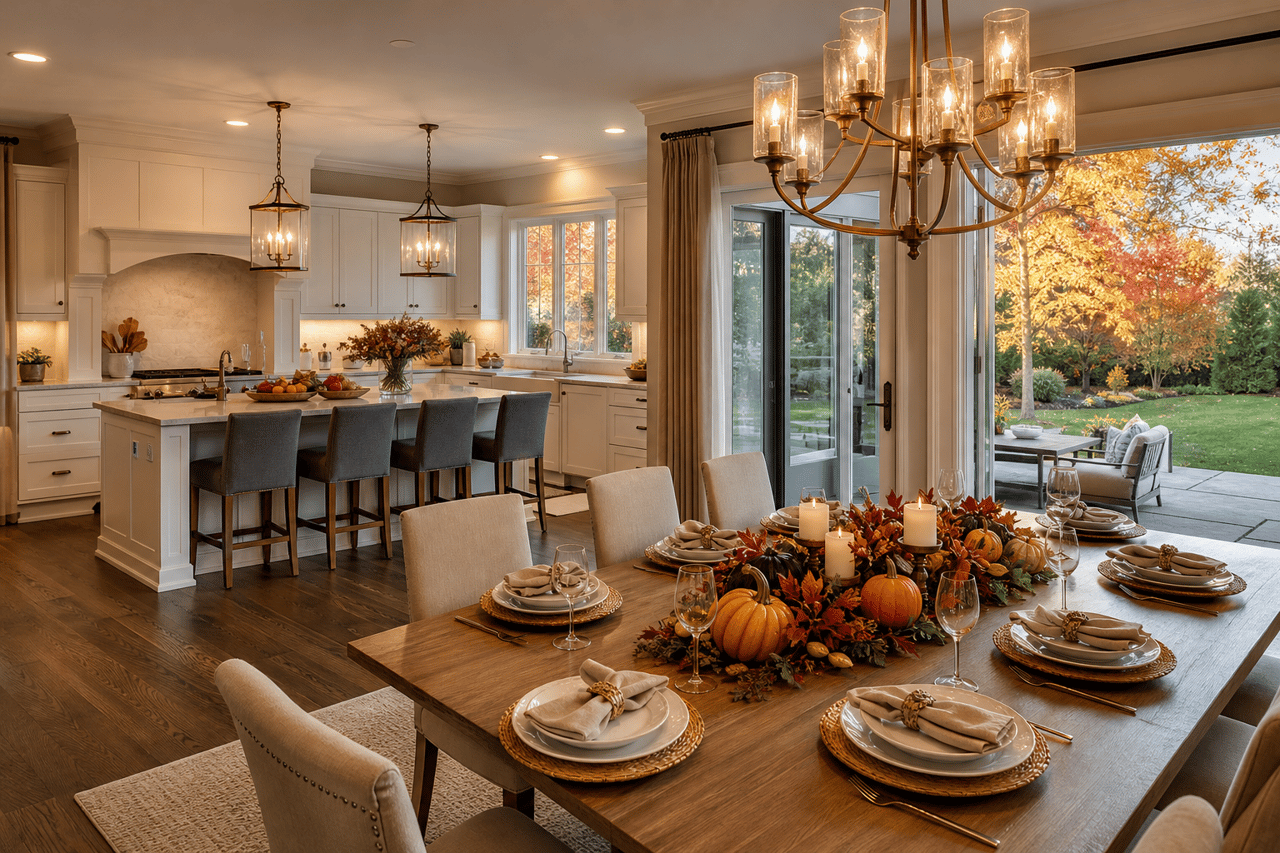
Open-concept living remains appealing because the cook can participate in the gathering and guests can move naturally between the kitchen, dining area and family room. This arrangement can be especially practical for casual entertaining or families who want one adaptable central space. It also makes it easier to extend seating with an additional table when the guest list grows.
Formal dining rooms offer a different advantage. They provide a defined setting for meals and can keep cooking noise, dishes and cleanup less visible. Many traditional homes in North Stamford and Westover include separate dining and living rooms, sometimes with doorways wide enough to create connection without eliminating the identity of each space.
Neither layout is automatically better. A buyer who hosts one large holiday meal each year may not want a room that sits unused the rest of the time, while someone who frequently entertains may value a dedicated dining room. The key is flexibility: a dining room that can also function as a library, office or homework space may offer more year-round value than a room designed for only one purpose.
Make Sure Guests Can Arrive Comfortably
Parking can become one of the biggest differences between entertaining in a detached home and hosting in a condominium. In North Stamford or parts of Westover, a property may have a driveway with room for several vehicles, but buyers should look at its actual shape and grade. A long driveway does not necessarily provide easy guest parking if cars cannot pass, turn around or leave without moving other vehicles.
Downtown Stamford and Harbor Point offer a different entertaining experience. Condominium and townhome buyers should confirm how guest parking works, whether spaces are assigned and whether building rules affect the use of shared lounges, terraces or other amenities. These details vary by property, so they should be verified through association documents and direct questions rather than assumed from the listing.
The arrival sequence inside the home matters too. A visible coat closet, practical entry bench or nearby mudroom can prevent the living room from becoming a collection point for coats, bags and wet shoes. During Connecticut's colder months, covered entries and easy-to-clean flooring are not merely aesthetic features; they help a home handle rain, leaves and winter weather while keeping guests comfortable.
Plan for Overnight Guests and Flexible Rooms
For buyers with family arriving from outside Fairfield County, overnight space may be just as important as the dining room. A dedicated guest bedroom is convenient, but a home office, finished lower level or den can also work if it offers privacy, nearby bathroom access and a safe, comfortable sleeping arrangement. Flexible rooms tend to serve a household better throughout the year.
Bathroom placement can have an outsized effect on hosting. A powder room near the main living area allows guests to avoid walking through private bedroom spaces. If an older Stamford home has only one bathroom or an unconventional layout, buyers should consider whether an additional bath is feasible and whether that project would require changes to plumbing, septic capacity or association approval.
North Stamford buyers should verify whether a particular property uses public utilities or private well and septic systems, since conditions vary by address. When renovations or additional bedrooms are being considered, the existing system and relevant approvals can affect what is possible. This is an area where property records, inspections and qualified local professionals matter more than assumptions based on the home's apparent size.
Treat Outdoor Space as an Extension of the Home
Thanksgiving may be associated with indoor dining, but outdoor areas still influence how well a home entertains throughout the year. A patio near the kitchen can support grilling and outdoor meals, while a screened porch or covered terrace can extend the usable season. Direct access is important because outdoor space is less convenient when hosts must carry food through a bedroom, down steep stairs or around the side of the house.
In North Stamford, larger wooded settings may provide privacy and room for multiple outdoor zones, but buyers should evaluate maintenance, drainage, lighting and the condition of decks or retaining walls. Mature trees can create a beautiful setting while also requiring ongoing care. The best entertaining yard is not simply large; it feels connected to the home and manageable for the owner.
Shippan Point presents different considerations because of its coastal setting near Long Island Sound. Buyers evaluating outdoor kitchens, patios or lower-level entertaining areas should review the property's elevation, drainage, applicable flood-zone information and insurance implications. Those factors are property-specific and should be confirmed during due diligence rather than inferred from the neighborhood alone.
Match the Home to the Stamford Neighborhood
Entertaining preferences can help narrow a Stamford home search because layouts, lot sizes and building types vary considerably across the city. North Stamford often attracts buyers seeking detached homes, privacy and substantial outdoor space. The tradeoff is that hosts and guests generally rely on driving, making driveway design and exterior lighting especially important.
Westover offers a range of established single-family homes with both traditional and updated layouts. Buyers may encounter formal rooms, additions and renovated kitchens that reflect different eras of ownership. It is worth examining how those spaces connect, since an addition can create excellent entertaining space or leave behind awkward transitions between the original home and newer rooms.
Downtown Stamford and Harbor Point can suit hosts who prefer a more urban setting and want restaurants, residential buildings and transportation options close by. In these areas, successful entertaining may depend less on a private yard and more on an efficient interior, balcony, building amenities and clear guest-access procedures. Buyers should closely review association rules, reservation policies and any restrictions affecting gatherings or shared spaces.
Springdale and Glenbrook offer a mix of single-family homes, multifamily properties, condominiums and townhomes around their respective Metro-North stations. For hosts, the ability of some guests to arrive by train may be useful, but the home's immediate parking and pedestrian access still require attention. In Shippan Point, indoor-outdoor flow and water-oriented surroundings may be priorities, while practical coastal due diligence remains essential.
Evaluate Entertaining Features During a Showing
A showing is the best time to test how a home would perform with a full guest list. Stand at the front door and trace the path to the coat closet, kitchen, dining area and powder room. Then imagine several people moving through those spaces while food is being prepared and children or older relatives are present.
Open cabinets, where permitted, to understand usable storage rather than relying on appearances. Look for outlets near likely buffet or beverage stations, note where trash and recycling would go, and consider whether dining chairs would block a doorway when occupied. If outdoor entertaining matters, walk the route from the kitchen to the patio and pay attention to steps, surfaces and lighting locations.
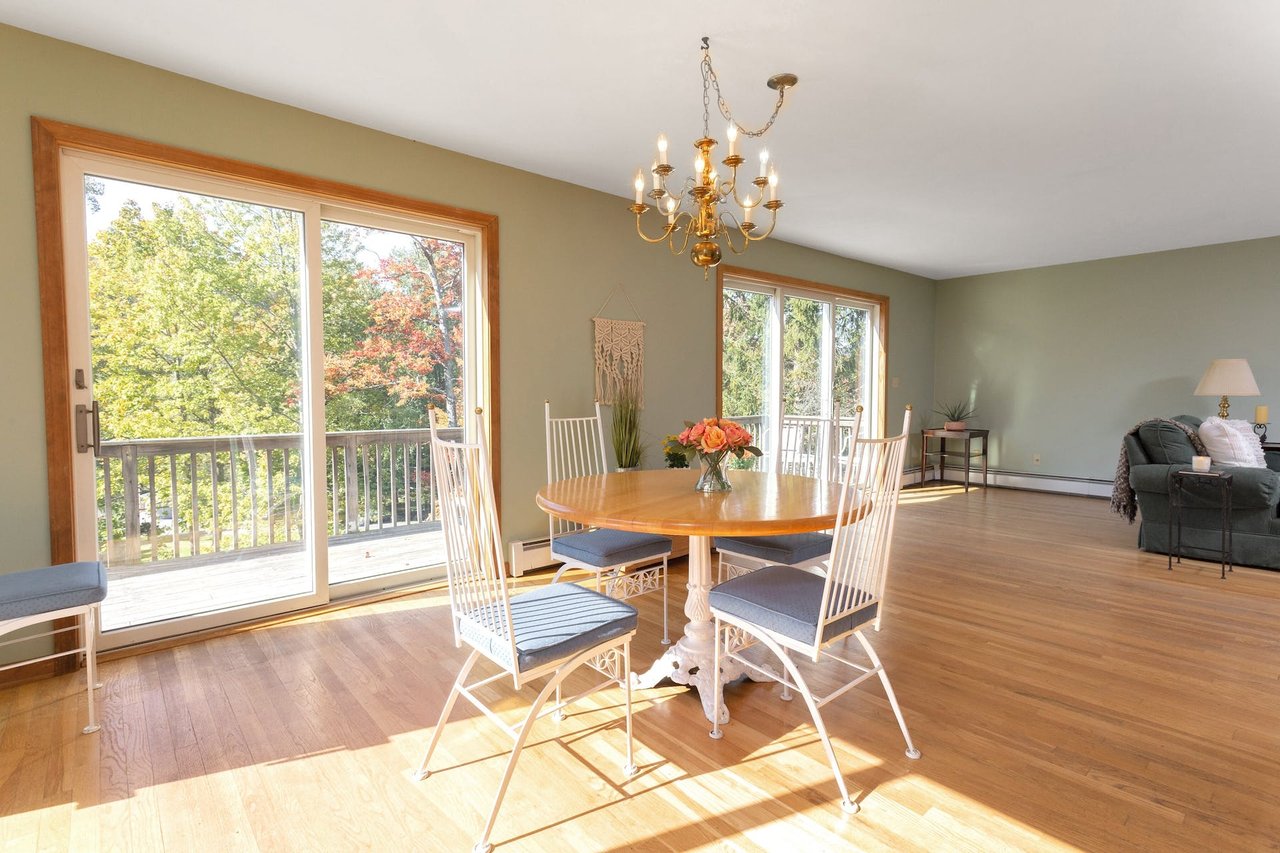
Measurements are particularly important in condominiums and smaller homes. A staged room may contain a narrower table or fewer chairs than you would use, so compare the space with your actual furniture. In larger houses, do not let extra square footage distract from poor connections between rooms; proximity and flow often matter more than total size.
Consider Entertaining Appeal When Selling
Sellers can help buyers understand a home's entertaining potential without creating an elaborate holiday display. A dining table scaled correctly to the room, clear kitchen counters and unobstructed pathways make it easier for buyers to visualize a gathering. If a room has flexible uses, the staging and marketing should establish one clear purpose rather than trying to show several functions at once.
Practical improvements can also be more valuable than decorative ones. Repairing a loose deck board, improving entry lighting, organizing pantry storage or addressing a sticking patio door can strengthen the impression that the home is ready to use. Sellers should also gather accurate information about parking, outdoor features, renovations and association amenities so those advantages can be presented clearly and responsibly.
The goal is not to make every property appear capable of hosting a banquet. It is to show how the home supports real life, whether that means six people around a kitchen table or a larger celebration flowing through several rooms. Buyers respond more confidently when a home's function is easy to understand.
The Right Entertaining Home Is Personal
A home that is perfect for one Stamford host may feel impractical to another. Some buyers will gladly trade a formal dining room for a larger kitchen, while others will prioritize guest bedrooms, driveway capacity or a private backyard. Clarifying those preferences early makes the search more focused and helps distinguish meaningful features from attractive distractions.
If you are looking for a Stamford home that fits the way you gather—or preparing to sell a property with exceptional entertaining spaces—connect with the Staci Zampa Team for knowledgeable guidance on buying or selling real estate in Stamford.